
Supporting Auditory Processing Differences:
Practical, Research‑Informed Strategies

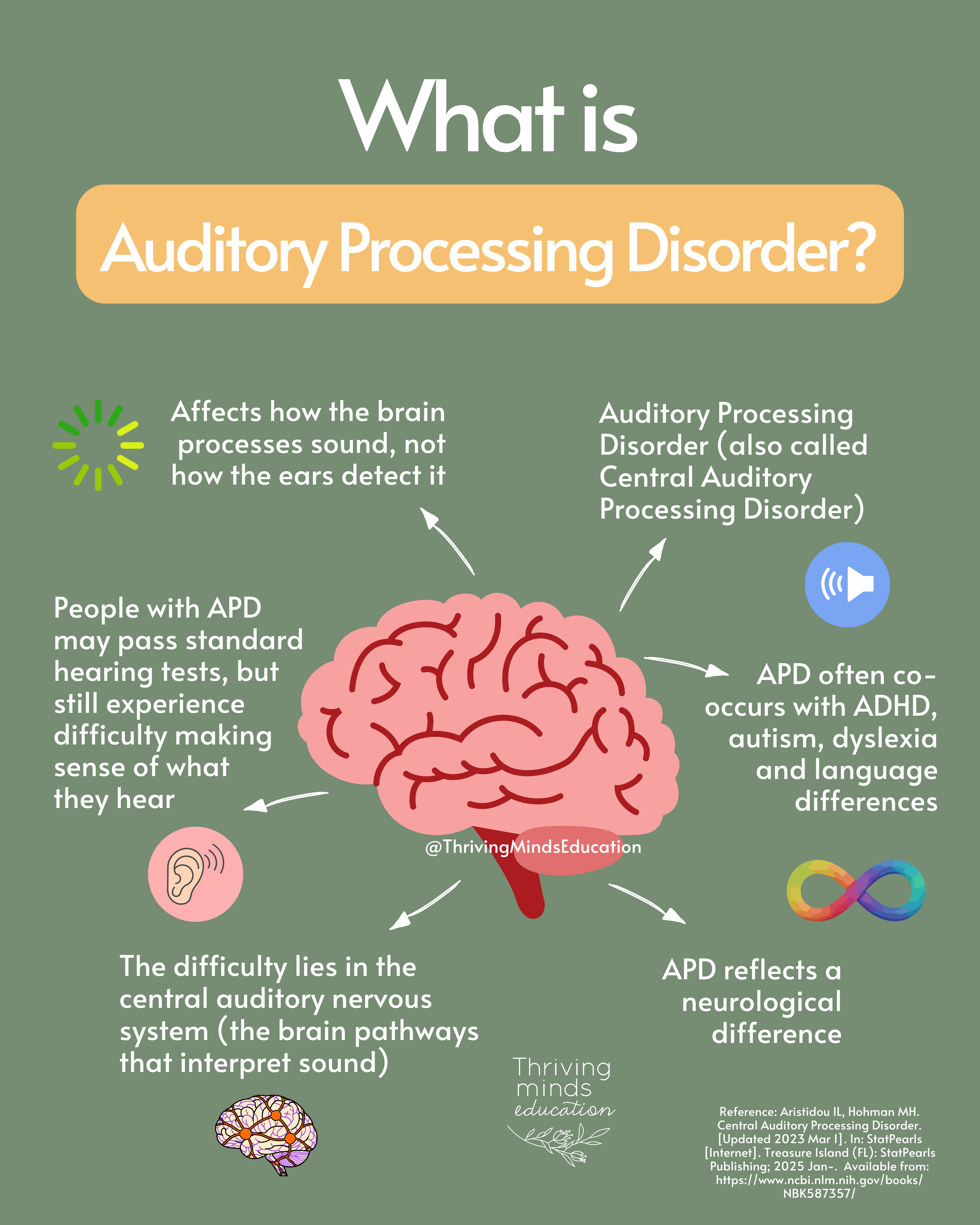
Auditory Processing Disorder (APD), sometimes referred to as Central Auditory Processing Disorder (CAPD), describes differences in how the brain makes sense of sound. People with auditory processing differences may hear sounds clearly, yet still find it difficult to interpret spoken information, especially in busy, noisy, or fast‑paced environments.
This blog draws on current research to explain what auditory processing differences are and, importantly, how we can provide meaningful, neuroaffirming support at home, school, work, and in the community.
What are auditory processing differences?
Auditory processing refers to the brain’s ability to:
Understand speech
Tell similar sounds apart
Work out where sounds are coming from
Process the timing and order of sounds
When this processing is effortful, people may experience listening fatigue, misunderstand spoken instructions, or struggle to follow conversations, particularly when there is background noise or multiple speakers.
Auditory processing differences are neurological in nature and are not related to intelligence, effort, or behaviour. They often occur alongside ADHD, autism, dyslexia, and language differences, while reflecting a distinct way of processing sound.
Why support matters
Listening requires significant cognitive effort for people with auditory processing differences. Without appropriate supports, this can lead to fatigue, anxiety, disengagement, and misunderstanding, especially in learning and work environments.
Support is not about making someone “try harder”. It’s about reducing listening load and increasing access to information.
Research‑informed ways to support auditory processing differences
1. Reduce background noise
Noisy environments significantly increase listening effort. Practical strategies include:
Minimising competing sounds where possible
Using soft furnishings, carpets, and acoustic panels
Closing doors or windows to reduce external noise
Offering quieter spaces for focused listening or learning
2. Use visual supports
Visual information can greatly support auditory understanding:
Provide written instructions alongside verbal ones
Use visual schedules, diagrams, and key words
Display important information on slides or whiteboards
Follow up spoken instructions with written summaries
3. Adjust communication style
Small changes in how we communicate can make a big difference:
Speak clearly and at a steady pace
Pause between instructions or ideas
Emphasise key words and concepts
Check for understanding without putting someone on the spot
Allow extra processing time before expecting a response
4. Support attention and memory
Auditory processing differences often intersect with working memory and attention demands:
Break information into smaller chunks
Repeat or rephrase key points
Encourage note‑taking or audio recording where appropriate
Provide step‑by‑step instructions rather than long verbal explanations
5. Environmental and technology supports
Environmental access can significantly reduce listening strain:
Preferential seating close to the speaker
Assistive listening devices (when recommended by an audiologist)
Clear sightlines to the speaker
Encourage speakers to face forward so lips and facial cues can be read
Ensure good lighting so facial expressions are visible
These strategies recognise that many people rely on visual information to support auditory understanding.
6. Build skills and strengths
Support should also focus on empowerment and strengths:
Auditory training may be helpful for some individuals
Teach self‑advocacy skills (e.g. asking for repetition or written instructions)
Encourage use of personal strategies that reduce listening fatigue
Recognise and value strengths such as visual thinking, creativity, and problem‑solving
A strengths‑based perspective
Auditory processing differences are not a deficit in intelligence or ability. They reflect a different way of processing information. When environments and communication styles are more accessible, people with auditory processing differences can participate fully and confidently.
Inclusive practices benefit everyone, not just those with identified auditory processing differences.
Final thoughts
Supporting auditory processing differences starts with awareness and flexibility. By reducing unnecessary listening barriers and offering multiple ways to access information, we create environments where people can thrive rather than struggle.
If this blog resonates with you, as a parent, educator, employer, or self‑advocate, consider how small changes can make communication more accessible in your everyday spaces.
For more neuroaffirming education, practical tools, and resources on auditory processing and neurodiversity, follow Thriving Minds Education or explore our resources.